
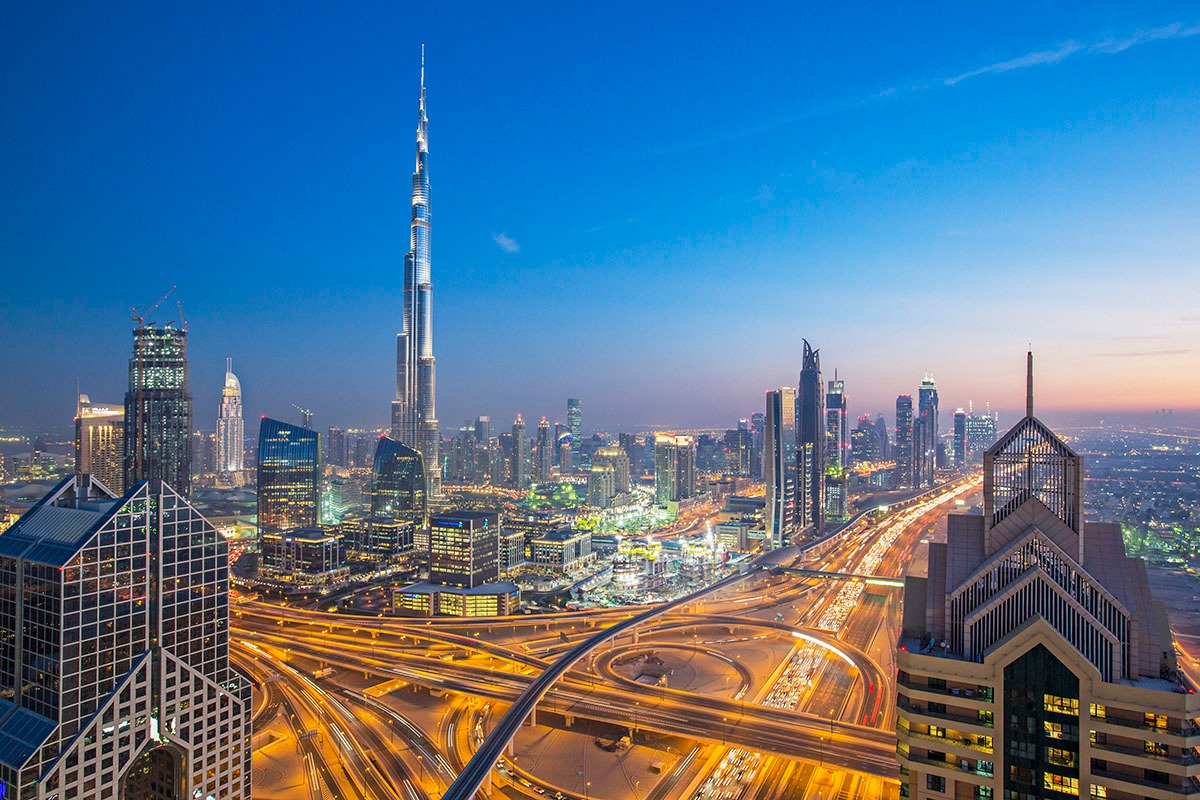
2017年世界经济论坛全球未来理事会年度会议
概览
The Globalization of Knowledge in a Fracturing World
Around 700 experts from academia, business, government and civil society came together in Dubai, United Arab Emirates, for the Annual Meeting of the Global Future Councils 2017 dedicated to promoting innovative thinking on the future.
Council members built on the ideas and insights from the first year of their two-year term, adapted and enhanced their thinking by engaging other councils in the network, and developed a framework to capture actionable recommendations for global decision-makers facing the disruptions of the Fourth Industrial Revolution.
The way we as a society choose to deploy emerging technologies has the potential to exacerbate the challenges of a fragmenting world, but also to deliver new transformative solutions. The outcomes of this meeting and the proposals for a shared vision for progress, building on the individual council discussions, will directly inform the World Economic Forum Annual Meeting 2018 in Davos-Klosters, Switzerland, as well as the Forum’s ongoing global initiatives.
Meeting highlights
1. The Forum opened access to its Transformation Maps, a digital tool used by leaders for framing knowledge around 125 issues, industries and economies as well as their sometimes-hidden connections. Future iterations of the platform will be shaped with the engagement of the public as well as some of the world’s leading universities, think tanks and international organizations. Over 1,500 people registered on the platform in its first 72 hours.
2.The Network of Global Future Councils articulated 10 Visions for 2030, ranging from a world of ubiquitous information to a workplace where humans will increasingly be working alongside robots. Recommendations relating to these visions will be developed within the ongoing workstreams of the Forum’s 14 System Initiatives.
3. More than 100 senior government leaders from the United Arab Emirates participated in two special strategic sessions that explored emerging technologies and enablers of the Fourth Industrial Revolution, engaging directly with experts from the Network of Global Future Councils on policy recommendations.
4. The meeting closed with the UAE announcement of a new Centre for Future Readiness – supported by “future ambassadors” and global protocols on artificial intelligence and the Fourth Industrial Revolution.
Examples of council outcomes
1. The Council on Artificial Intelligence and Robotics is developing a curriculum for ethics in the Fourth Industrial Revolution in order to help ensure human values are at the centre of all development of emerging technologies. The council also agreed to act in an informal capacity as an advisory group for the United Arab Emirates’ new Ministry for Artificial Intelligence.
2. The Council on Neurotechnologies and Brain Sciences agreed to support two initiatives: the development of a network of affordable brain labs, in emerging and developing economies; and a major public-private collaboration aimed at addressing the prevention of depressive disorders and Alzheimer’s disease.
3. The Council on the Future of Cities and Urbanization published a paper, Data-Driven Cities: 20 Stories of Innovation, underscoring innovative ways big data has been deployed in cities to improve efficiency and enhance quality of life.
4. The Council on the Future of Environment and Natural Resource Security advanced a new 4IR for the Earth Initiative, a collaboration between the World Economic Forum, Stanford University and PwC with support from the Mava Foundation. The purpose of the alliance is to identify, fund and scale up new ventures, partnerships and business models that are able to harness Fourth Industrial Revolution technologies to solve the Earth’s challenges.
5. The Council on the Future of Human Rights designed four guiding principles governing human rights concerns in machine learning: Active inclusion; Fairness; Right to understanding; and Access to remedy/redress.
View and share content
In addition to exploring the programme and discussions on TopLink, you can view and share content related to the meeting and continue the conversation with your network:
- Watch live webcasts of sessions and find information about the event at https://wef.ch/gfc17
- Guide to embedding sessions on your website at http://wef.ch/howtofollow
- View the best photos from the event at https://www.flickr.com/photos/worldeconomicforum/sets/72157690438326886
- Read the Forum Agenda at http://wef.ch/agenda
- Become a fan of the Forum on Facebook at http://wef.ch/facebook
- Watch our videos at http://wef.ch/video
- Follow the Forum on Twitter via @wef and @davos, and join the conversation using #GFC17 and #WEF
- Follow the Forum on Instagram at http://wef.ch/instagram
- Follow the Forum on LinkedIn at http://wef.ch/linkedin
- Learn about the Forum’s impact on http://wef.ch/impact
- Subscribe to Forum news releases at http://wef.ch/news